Earn College Credits. Launch a Real Business. In High School.
COE 291 is a dual-credit entrepreneurship course delivered through Kentucky's Work-Ready Dual Credit program — empowering students to launch real businesses, earn college credit, and compete for seed capital, all at zero cost to schools or families.
9
Sprint curriculum
60+
Partner schools & universities
700+
Student MVPs launched
$60K+
Seed capital deployed
The Course
COE 291: Venture Design & Market Validation
A 200-level dual-credit course where students earn college credit by making, presenting, and defending real products, services, and software solutions. Offered through Kentucky's Work-Ready Dual Credit Scholarship — fully funded by the state.
Open to all students regardless of past grades, career pathway, or future academic goals. Entrepreneurship is not a separate track — it's the skill that multiplies every other skill a student develops.
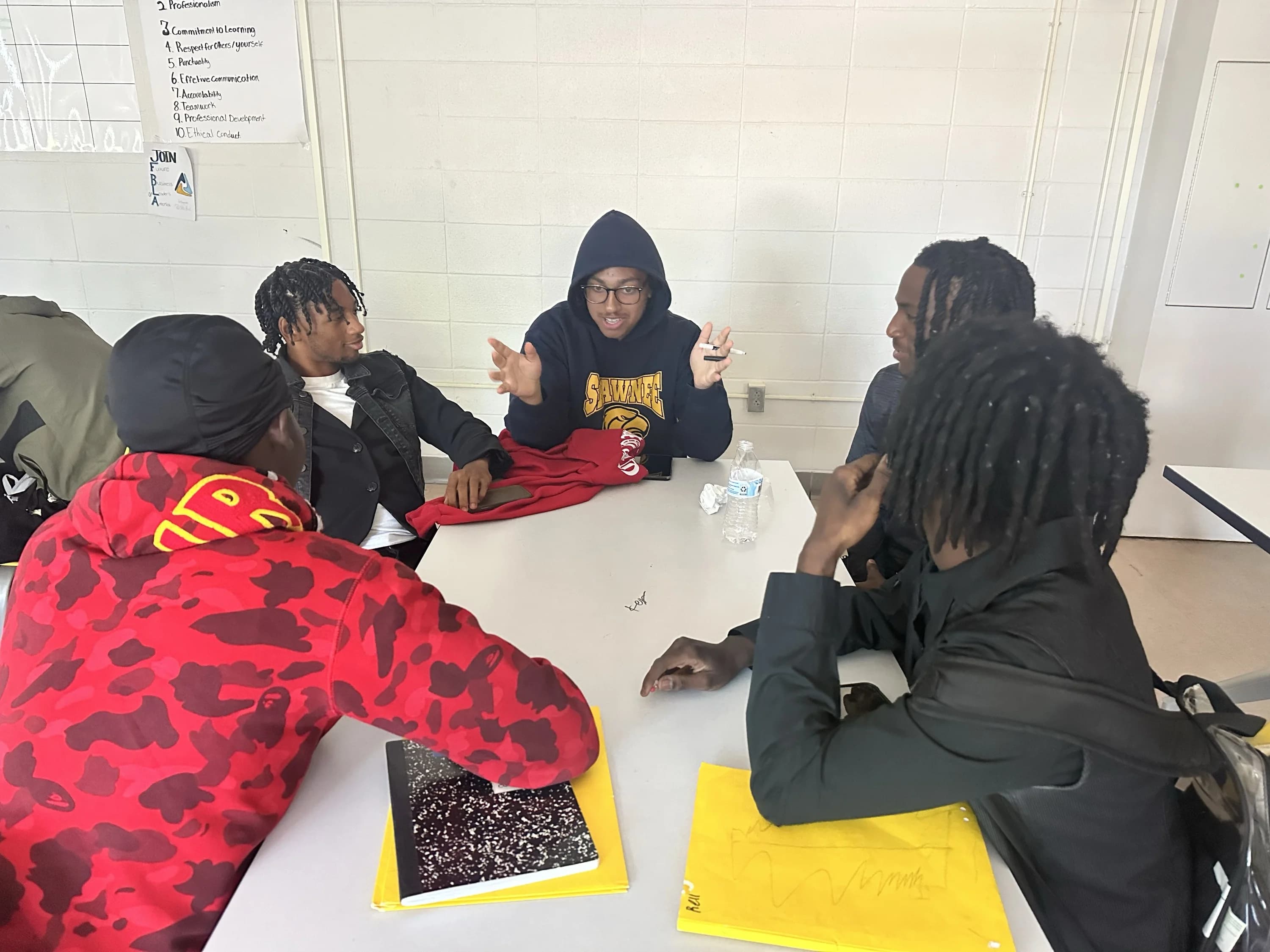
Real students. Real work. Real businesses.
University Partners
Funded, experienced founders arrive at partner universities ahead of their peers — with a working business and college credit already in hand.
The Curriculum
9 Sprints. Four Phases of Innovation.
Every sprint builds on the last — from discovering a real problem in their community to defending a funded, market-ready startup.
Ethnographic Research & Local Friction
Students conduct observational research and discovery to uncover real industry pain points in their community.
Industry Immersion & Expert Validation
Discovery calls and expert interviews validate whether the problem is worth solving.
Root Cause Analysis & Problem Definition
Empathy maps, root-cause analysis, and "How Might We" statements sharpen the problem statement.
Ideation & Divergent Thinking
Structured ideation generates and evaluates multiple solution paths before committing to one.
Low-Fidelity Prototyping
Students build sketches and wireframes to test early concepts quickly and cheaply.
User Testing & Iterative Design
Real user testing sessions gather actionable feedback from stakeholders and subject matter experts.
Venture Modeling & Scalability
Business Model Canvas and Lean Canvas documents articulate value proposition, pricing, and unit economics.
Brand Identity & Investor Narrative
Students create professional pitch decks, brand style guides, and investor-ready narratives.
Market Development & Go-Live
Students execute a go-to-market strategy, launch their MVP, and defend their work at a regional pitch competition.
Student Outcomes
What Every Student Walks Away With
Identify & Validate
Identify real-world industry problems through ethnographic research and market analysis.
Defensible Strategy
Construct defensible, human-centered problem statements supported by data.
MVP Development
Design, prototype, and refine a Minimum Viable Product aligned to real user needs.
Data-Driven Design
Apply user testing and feedback to inform design decisions and product improvements.
Scalable Economics
Develop business models including value propositions, pricing, and unit economics.
Venture Narrative
Create compelling brand identities and investor-ready narratives for target audiences.
Market Execution
Execute a go-to-market strategy demonstrating readiness for initial customer engagement.
Professional Skills
Demonstrate critical thinking, inquiry, collaboration, and real-world communication.
Student Founders
Real Students. Real Results.
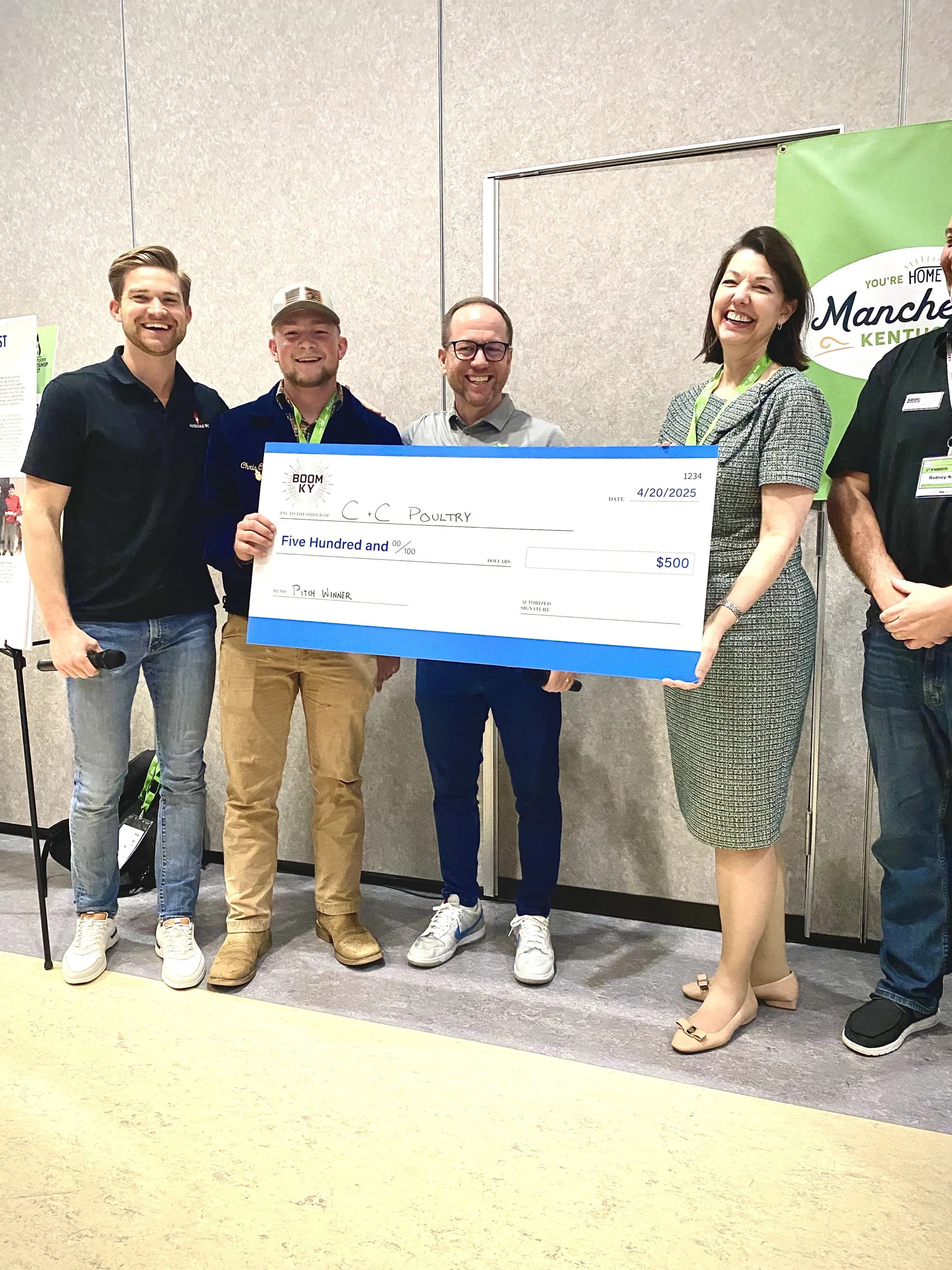
“Growing up on my family farm, I dreamed of turning C & C Poultry into a thriving egg brand. Boom KY's accelerator taught me how to refine my business model, conduct customer interviews at farmers' markets, and test my MVP with local retailers. Their $2,500 grant helped me buy my first incubator and start my initial batch of chicks. Now, I'm a freshman at the University of the Cumberlands, majoring in business finance and expanding my weekly output to 1,000 chicks for regional Farm & Fleet stores. Without Boom KY's funding and mentorship, I wouldn't have had the resources—or the belief—to turn my vision into reality.”

Chris Cureton
Founder of C & C Poultry
“Before Boom KY, I had an idea for Gearhub—an online tech accessory store—but I didn't know where to start. Through the 8-week accelerator, Boom GPT guided me step-by-step: validating my market, building a landing page, and launching my MVP. With their $2,500 seed grant, I purchased inventory, set up my Shopify storefront, and ran my first ad campaign—landing 30 orders in the first month. Today, I'm proud to be a freshman at the University of the Cumberlands, where I'm studying business administration and scaling Gearhub into new product lines. The skills and confidence I gained from Boom KY set me on the path to success.”

Caleb Schwenke
Founder of Gearhub
The Pathway
From High School to Funded Founder
High School
Earn 3 credits, complete certifications, develop and defend your MVP concept.
University Partner
Credits transfer seamlessly. Arrive ahead of peers with a working business.
Pitch Competition
Compete at regional pitch events for $2,000 in non-dilutive seed capital.
Boom Residency
Top founders enter the Boom Residency — accessing more capital, mentors, and a path to scale.
Ready to Bring Boom to Your School?
Zero cost to your district. Students earn college credit, build real businesses, and compete for seed capital. We handle curriculum, credentialing, and pitch event access.